Join the Conversation

Join the Conversation.
I invite your comments, suggestions, and additional information about any topic mentioned.
Showing posts with label steamboats. Show all posts

Wednesday, August 17, 2022

Becky Thatcher and the Dreamers

Becky Thatcher and the Dreamers

Sounds like a Sixties rock and roll group. But we’re talking about the steamboat BECKY THATCHER and the dreamers who kept her active for over 80 years. Thirty of those years were in Marietta. She had two phases of her long (for a steamboat) life: the Public Servant and the Entertainer.

Dreamer: one who has ideas or conceives projects regarded as impractical; a visionary. Each of the BECKY’S “dreamers” wanted to make the boat the best it could be, often against long odds. 

The Public Servant
Here she is, in her first life as the MISSISSIPPI III, a workboat and inspection craft for the Mississippi River Commission. What a striking vessel, with crisp lines and bright colors, “shining like a birthday cake,” as her captain, David Cook, described her later. 
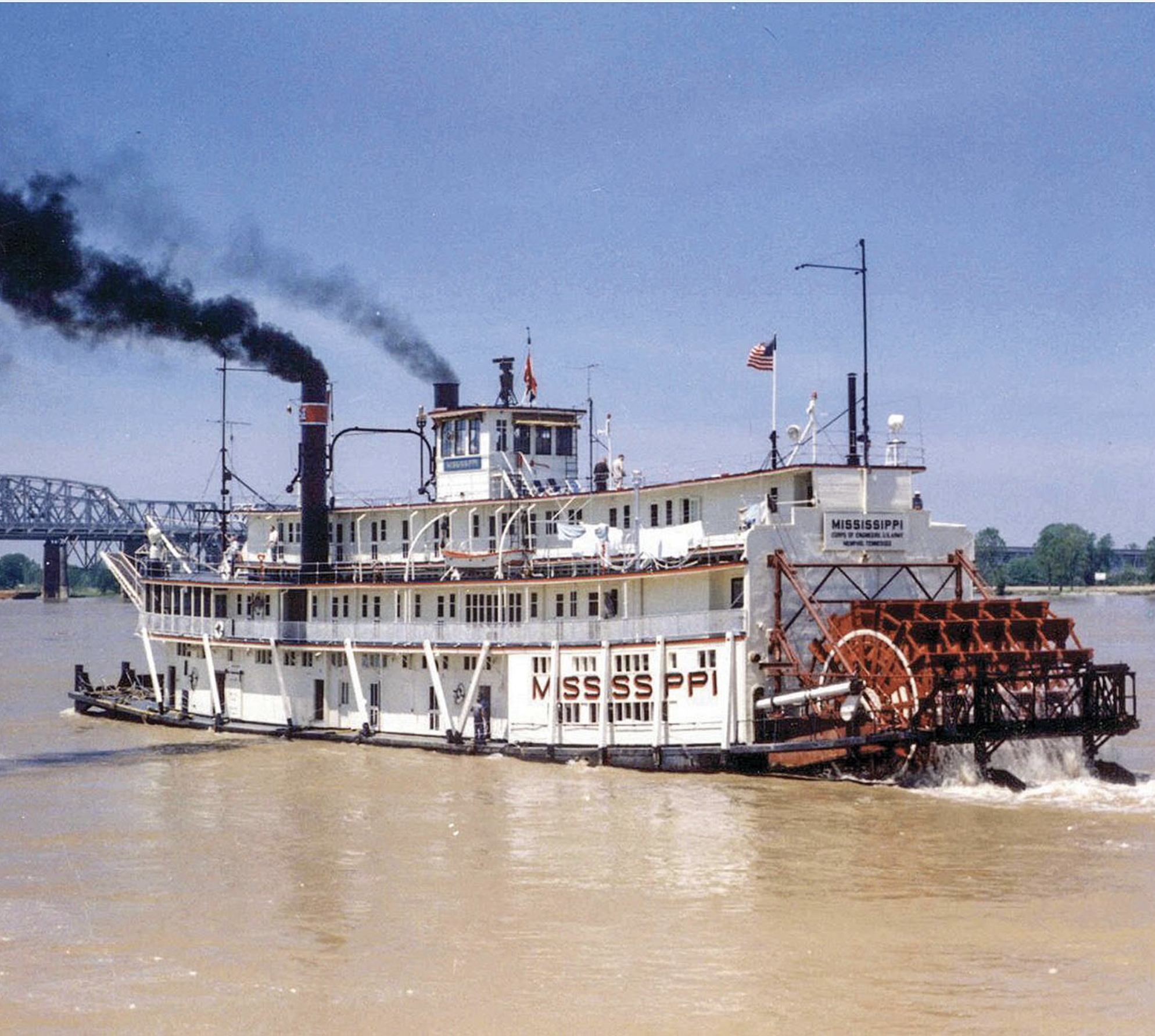
Photo from Waterways Journal November 29, 2021


Her birth as the MISSISSIPPI III was unconventional for a steamboat. Steamboat historian Keith Norrington explains in a Waterways Journal article:

The last of a line of government steamboats to carry the name the Mississippi had an unusual beginning. A new steel hull, constructed by the Howard Shipyard at Jeffersonville, Ind., in 1926 and measuring 185 feet in length by 38 feet in width, was towed to Paducah, Ky. Waiting at the Ayer & Lord Marine Ways were the remains of the second Mississippi (Mississippi II), formerly the towboat Leota. The upper works of the retired boat were then “scooted” over onto the new hull, which included totally new main deck bulkheads, boilers and engines. Reportedly, the only casualty of the ticklish operation was a broken pane of glass in a door on the texas deck.

MISSISSIPPI III at work moving equipment. From Memphis, TN Public Library Archives, viewed at Steamboats.com, Dave Thomson Collection    


She was born a hybrid of old and new. She also had a hybrid function - as a “packet” (passenger) boat and a “towboat” (workboat). The MISSISSIPPI III spent most of her time working - moving barges, equipment, and supplies for the Mississippi River Commission. She could also have fun, so to speak, conducting river inspection tours for the Commission members and serving as a “floating ambassador for the Corps of Engineers.” That meant that she hosted politicians and dignitaries - in first class style. 

MISSISSIPPI III’s long serving Captain David Cook was one of the dreamers - not in an impractical sense, but in his absolute dedication to “his” ship.  He was so proud of her first class appearance. In the 1950’s, MISSISSIPPI III answered a distress call from the cruise boat DELTA QUEEN which had mechanical problems. MISSISSIPPI III towed the DELTA QUEEN to Natchez. Captain Cook invited her passengers aboard the MISSISSIPPI III for a tour. One visitor observed that “everything gleamed with cleanliness and polish.”

Captain David Cook in the wheelhouse of MISSISSIPPI III. Photo from steamboats.com, Dave Thomson Collection


A testimonial at his passing in 1963 captured the essence of this man, the last of the MISSISSIPPI III’s captains:

He was the last of his kind, a riverboat skipper who could have followed no other career because he was…born to two precious generations of river men. He had learned the secrets of the Mississippi (River) - and its tributaries - before other boys were out of high school…Generals and congressmen…knew him as a perfectionist in the wheelhouse and an old-school gentlemen in periods of relaxation.


The Entertainer
Frank C. Pierson was the dreamer who began the BECKY THATCHER’s entertainer career on the St. Louis riverfront. The BECKY would bring entertainment, education, economic benefit, and work experiences to thousands of people over the next 50 years. 

Pierson was a former advertising man who migrated to riverboat entertainment. In 1964 he bought the venerable showboat GOLDENROD which continued to offer melodramas and other shows. He purchased the MISSISSIPPI III in 1965 which he renamed BECKY THATCHER II1. After a lengthy remodeling, using borrowed money, the BECKY opened in 1968 with a restaurant and riverboat museum.

Frank Pierson recruited another dreamer, river historian and educator Ruth Ferris, to manage the Midship Museum on the BECKY THATCHER. She was the recently retired curator of the Missouri Historical Society’s River Room. Ruth jumped at the opportunity and recalled it as the highlight of her river history career.  Being on the BECKY THATCHER “looking out…. at the mighty Mississippi…Eads Bridge and….the magnificent Gateway Arch made my thoughts and spirit soar above everyday things,” she said. Many students from her 35 year teaching career visited the Museum. One of those students was the late singer/song writer John Hartford. He wrote a song about her, “Miss Ferris.” It explains how she imparted love of the river to a restless kid.

First verse of “Miss Ferris”:
Now I had a teacher when I went to school
She loved the river, and she taught about it too
I'se a pretty bad boy, but she called my bluff
With her great big collection of steamboat stuff
Oh, yeah…..

Midship Museum curator Ruth Ferris looks at a model of the Str. Mississippi III. (Keith Norrington collection). Ruth was proud of the museum, “This is the real thing; a riverboat museum on a riverboat on a river!” From Waterways Journal May 17, 2021 article by Keith Norrington


Frank Pierson was a master at filling seats, producing shows, and making things happen. People loved the river setting and old time entertainment.  He was the waterfront’s greatest promoter.  The BECKY THATCHER with her imposing profile complemented Pierson’s other venues. St. Louis Post-Dispatch columnist Jack Rice called Pierson “Quixotic,” but showcased his many projects on the St. Louis waterfront in a January, 1967 article. 


Cartoon caricature of Frank Pierson with an imagined Mark Twain whom a columnist thought would be at home on the St. Louis waterfront with Pierson’s riverboats. St Louis Post-Dispatch 2/2/1968 viewed at newspapers.com


However, his riverboat venues were a constant struggle:
  • The weather and periodic river flooding were risks. Flooding could close the boats for weeks at a time. Once the BECKY THATCHER broke loose during a storm. She floated down river and damaged a pipeline owned by Monsanto. 
  • Pierson lost his first showboat to fire. Another riverboat, the original BECKY THATCHER, sank; he bought the former MISSISSIPPI III as a replacement. 
  • Finances were always an issue.  Many expenses were fixed and continued even when revenues slowed. Borrowed money had to be repaid.
  • The St. Louis waterfront was itself a challenge. It was hard for visitors to get to. Plans to upgrade the oft-neglected area came and went. A freight train ran through the waterfront entertainment area, often blocking traffic. A couple of times, “when the moon and Pierson were both full,”2 Frank Pierson attempted a citizens’ arrest of the stopped train’s engineer. It didn’t work; he was the one arrested when police showed up.
  • Media sometimes mocked or questioned his “Quixotic” ventures. 
Frank Pierson relished the challenges. Columnist Rice: “He seemed to shoulder these responsibilities well, and almost always cheerfully.” He was a dreamer who got things done, a visionary always looking forward, whose BECKY THATCHER brought entertainment to thousands. 

The BECKY THATCHER era in St. Louis ended in 1975. Frank Pierson’s bank foreclosed on the BECKY THATCHER in May, 1974, because of past due loans. Legal wrangling ensued; public accusations filled the media. The BECKY herself became a melodrama reality show. It was hard to tell the villains from the heroes. In end, the BECKY THATCHER was sold to interests in Marietta, Ohio, in 1975.

Marietta, Ohio dreamers
Only a dreamer would bring a riverboat to a small market like Marietta, Ohio. The maxim “a boat is a hole in the water that you pour money into” comes to mind. Your author was present on the BECKY THATCHER when a Marietta Industrial Enterprises tow boat brought her to an excited Marietta community. Two years later a remodeled BECKY began her new career in Marietta. There were melodrama shows in the summer, a restaurant, a bar, and meeting room for events. 

BECKY THATCHER moored in Marietta ca 1980’s. Photo by Bruce Rea, from steamboats.com Keith Norrington Collection


The BECKY was a hit. Locals were proud of this addition to the town’s river heritage. Bus loads of tourists flocked into town to experience the revival of melodrama shows. Audiences really got into it, robustly cheering the hero and booing the villain. They loved the intermission “olios,” songs and comedy skits performed between acts of the show. It was very rewarding for those involved with the BECKY THATCHER. 
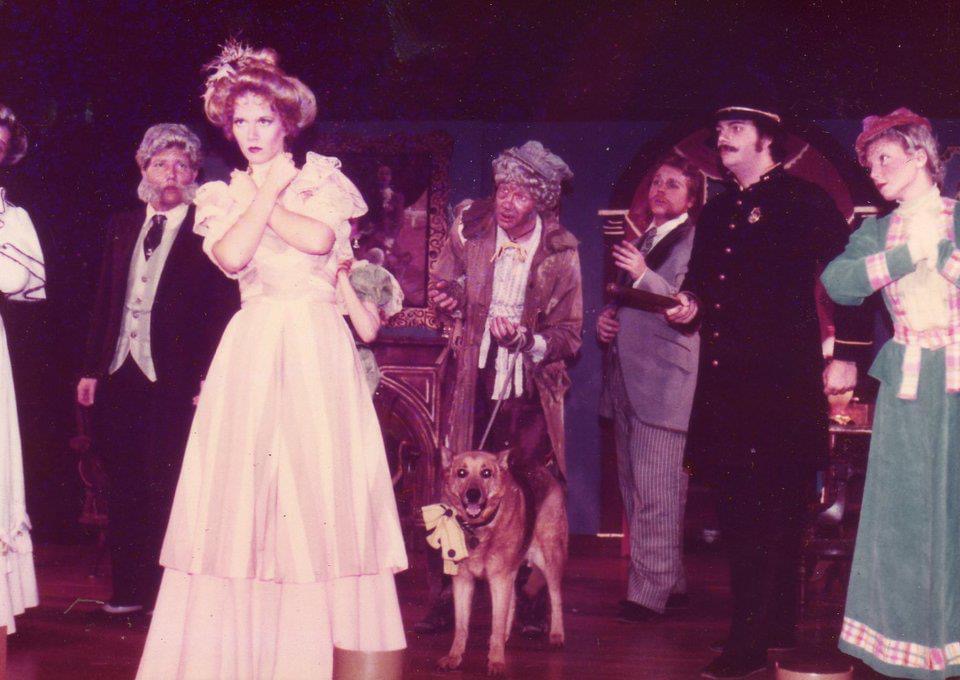
                  Becky Thatcher cast in 1981. Picture from Celia Peth-Gilroy. Now Celia Bills. Viewed on Facebook Showboat Becky Thatcher Alumni page

There were multiple dreamers that kept the BECKY THATCHER going in Marietta for more than 20 years.
  • Harry Robinson, Jr. was a CPA and businessman who had recently acquired the Hotel Lafayette. He saw the tourism potential of the BECKY THATCHER and put up his own money to make it happen. His hotel leased space for a restaurant on the BECKY. The Chillicothe Gazette on 12/27/78 reported that Robinson was gratified by the public response after the first full season. He noted “…there is something here that has captured the imagination of people.” He said that although the restaurant lost “substantial” money during it’s first year, it’s the boat’s contribution to the community that is important. “I feel good even though I lost money.” Harry Robinson’s  businesses supported the BECKY THATCHER for many years. 
  • Marietta College, and late drama professors Ron Loreman and Kent Nelson managed the theater, staging up to 4 melodrama shows each year. The latter two dedicated much time and effort for 15 years to the showboat theater - in addition to their College responsibilities. They persevered through balky facilities on the boat, limited budgets, and occasional crises (the boat sank in 1984) but were rewarded by seeing hundreds of young cast and crew members flourish3.  Marietta College provided dorm space for cast and crew and back-up facilities for the theater. 
  • Cast, Crew, and Staff members. Wow! These were the real dreamers. They were young, adventurous types, willing to endure hard work but with fun times in a small midwestern town. Seeing photos on the “Showboat Becky Thatcher Alumni” Facebook page brings back many memories for your author. I especially remember Bob Stanley, the dedicated maintenance person. The BECKY was his special ward
  • Janet Herman Barlow was the Showboat Theater Executive Director in from 1981-86. She recalled the Herculean efforts to continue, and then restart, the theater after the BECKY sank in early 1984. The theater season that year was on dry land at Marietta College; they called it the “Dry Dock” season. As a fund raiser, they sold glass containers provided by Fenton Art Glass filled with mud from the sunken boat. Janet kept the mud “inventory” at her home; she remarked that few theater directors have that on their resume’. The sinking gave the BECKY THATCHER unexpected publicity and restoring her became a cause celebre’. Lots of mud was sold. Janet said that then Ohio Governor Richard Celeste took a personal interest in the BECKY’s restoration after the sinking. He swooped into Marietta by helicopter. That was a thrilling experience for her. She said that his visit gave all involved a real morale boost. It gave recognition to everyone’s hard work and offered hope that the restoration could actually happen. The dreamers made it happen: the raising, financing, and restoration of the BECKY THATCHER were accomplished.
  • Other dreamers included Ohio Showboat Drama Inc. Board memberslocal bankers who pushed through and later forgave loansmany donors, and legislators who helped obtain grant money. 
To use a lame mixed metaphor, it was a Marietta “dream team” who kept the BECKY “afloat” and active.  Tens of thousands benefited from her presence in Marietta over nearly 30 years.

The final BECKY THATCHER dreamer was Jeffrey Levin who bought the BECKY from Marietta and moved it to Pittsburgh. An article in the Pittsburgh Post-Gazette October 14, 2009 explained his plans: “Mr. Levin is hoping for a fresh start for The Becky Thatcher, returning it to its recent status as a riverside bar and restaurant. ‘I'd like to bring it back up to its grandeur," Mr. Levin said yesterday, ‘….potentially, a restaurant could be up and running within a week.’ "

Those plans did not materialize quickly enough. In late February, 2010, the BECKY THATCHER sank at Neville Island and could not be salvaged. It was a sad end for an 84 year old boat with a wonderful history. 

At the end of each theater show in Marietta, there was a song which the whole cast sang at the curtain call. The final verse appears below; everyone left the BECKY THATCHER in a positive frame of mind. That spirit is the legacy of the BECKY THATCHER (née MISSISSIPPI III).

So trust that the Becky Thatcher
Will always banish sadness and strife,
She'll be here always with people smiling
Who try to find the sunny side of life!!!


Frank Pierson’s original BECKY THATCHER sank; so this boat was a successor. But mostly she was known as the BECKY THATCHER without the “II”. But the hull of the original boat became a landing barge/boarding platform for the BECKY THATCHER. Your author walked across that barge many times.
Quote from St Louis Post Dispatch article November 20, 1988, by Joe Pollock.
3 There were at least two dozen actors, crew and office staff who each year ran the theater. Many of these went on to careers in fine arts.


Sources:

Barlow, Janet Herman, personal interview 8/7/2022
Flickr.com, photos, “Getting through the RR Bridge,” posted by Mike, 10/14/2009
“John Hartford Performs ‘Miss Ferris’ on a Steamboat,” youtube.com
Majors, Dan, “Riverboat owner to float restaurant idea on river here,” Pittsburgh Post-Gazette, 10/14/2009
Majors, Dan, Historic riverboat sinks in Ohio River, Pittsburgh Post-Gazette, 2/23/2010
Newspapers.com, numerous articles about the topics mentioned in this post
Norrington, Keith, Waterways Journal, articles dated 11/8/2019, 5/17/2021, and 11/29/2021
Norrington, Keith, steamboat.org post 8/15/2008
Pollock, Joe, “Death of Impresario is Loss for Theater in St. Louis,” St. Louis Post Dispatch, 11/20/1988, viewed at newspapers.com
Rice, Jack, “Down on the Levee, a Vintage Bar,” St. Louis Post-Dispatch, 1/29/1967, viewed at newspapers.com
“Showboat Becky Thatcher Alumni” Facebook group page
“Showboat catching on, backers say,” Chillicothe OH Gazette, 12/27/1978.
Steamboats.com, Dave Thomson Collection, Photos and narrative of the Becky Thatcher
The Commercial Appeal, St. Louis, “Capt. David M. Cook,” opinion page tribute, 9/29/1963
Wikipedia, “MV Mississippi”


Monday, November 15, 2021

Two Gems


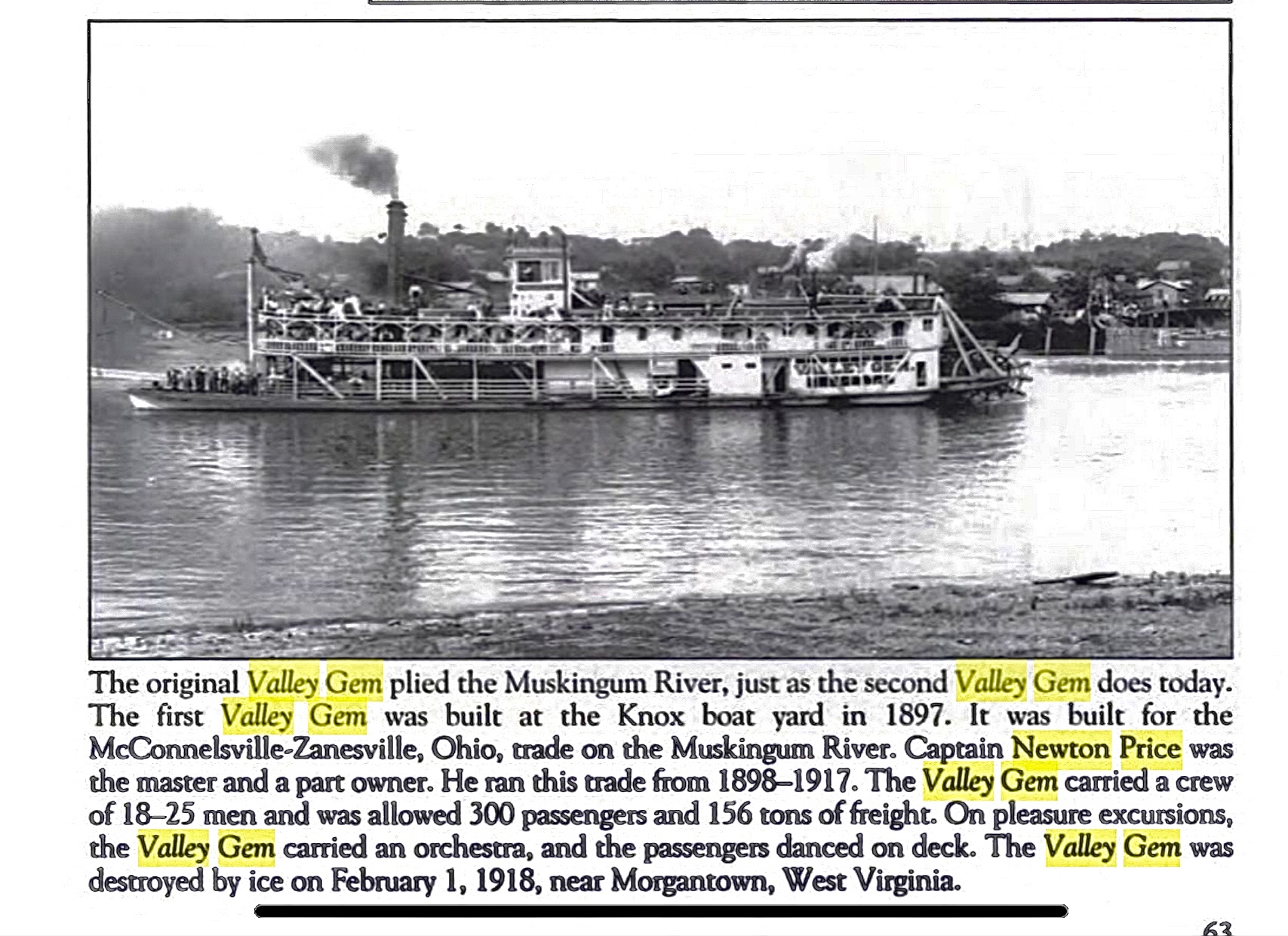
Valley Gem..... the name has a nice ring to it, especially since Marietta, Ohio is nestled in two valleys. Today’s VALLEY GEM sternwheeler cruise boat has been operated at Marietta for nearly fifty years by the Sands family. That boat’s namesake was a Muskingum River steamboat, also named VALLEY GEM.    Captain J. J. Sands explained that the VALLEY GEM was suggested by riverboat expert Frederick Way because that boat had the longest service on the Muskingum River without an accident.

The original VALLEY GEM was built at Marietta’s Knox and Sons boat yard in 1897. She was large enough to carry 300 passengers and 150 tons of freight but small enough to fit through the smaller lock chambers on the Muskingum River. Newton Price of McConnelsville was the captain and part owner of the VALLEY GEM.

VALLEY GEM  steamboat image on a postcard from icollect247.com

VALLEY GEM was one of over two hundred steamboats which ran on the Muskingum River. These boats were an integral part of the culture and economy of Southeast Ohio. They moved freight, farm products, passengers, and provided entertainment in the 1800’s up to about 1920. Many of them were built at Marietta’s Knox Boat Yard.

For steamboat enthusiasts, the original VALLEY GEM engineering details are as follows: She was a wooden hull sternwheel packet boat 125.4 feet long by 26.5 feet wide with 4.2 feet of draft. There were two boilers, 43 inches in diameter and 20 feet in length. The two steam engine cylinders had a 13 inch bore with a 5 foot stroke. That all added up to a state of the art steamboat which would touch the lives of thousands over nearly 20 years. She ran on the Muskingum River, mostly in the McConnelsville - Zanesville trade, from 1898 to 1917. 

The VALLEY GEM’s maiden voyage was on Friday, February 18, 1898. There were 99 passengers on board. The Zanesville Times Recorder was effusive in its description of the VALLEY GEM. Excerpts:

The steamer is indeed a gem. She is provided with each and all requirements of the United States government. The entire boat is lit up with electric lights. Her cabins and staterooms are elegantly furnished throughout. In all details and respects she is an A-1 steamer....Captain Price received many congratulations and high compliments upon his success in bringing out such a fine packet steamer.

Very laudatory verbiage, eh? How often today can a newspaper article also be your marketing message? All went well until the boat approached Zanesville. She suffered a “slight breakdown” in one of her engines, drifted downstream, and was “detained until a late hour last night” with necessary repairs. The passengers had to be offloaded from the boat. “The excursionists returned home by the steamer JEWEL and Zanesville and Ohio rail line.” It was not the ideal finish to a maiden voyage.


Steamboat VALLEY GEM at landing in Zanesville, Ohio circa early 1900's, from Muskingum Valley History Facebook page

Steamboat VALLEY GEM at unidentified location, viewed at picclick.co.uk


She ran a regular schedule from McConnelsville to Zanesville. There were also excursions and events on weekends. Captain Price entertained his Sunday School class on the boat in 1905. Crowds of 200-300 were typical for excursions; seems like a lot for a 125 foot long sternwheeler, smaller than today’s VALLEY GEM. 

There were often unexpected situations that the VALLEY GEM - and other steamboats, too - had to contend with. Examples:

3/2/1904. Riverboats usually tied up during winter. In 1904 the boat restart was delayed by ice in the river lasting 92 days, the longest stretch in 20 years. 

8/6/1899. Passengers were terrified by a severe electrical storm during a cruise. Many became hysterical; a pastor circulated and offered prayers.

9/3/1907. Two unidentified men opened fire on VALLEY GEM passengers with shotguns. Several were injured; none seriously. 

3/4/1898. The VALLEY GEM collided with a rival riverboat JEWEL. There was “ill will” from Captain Webster of the JEWEL who claimed the incident was intentional. Some area steamboats were heated rivals with the VALLEY GEM. They often raced each other to the same locks. It’s not clear if the VALLEY GEM was always the instigator. 

5/13/1899. VALLEY GEM collided with steamer ZANETTA as they raced to the Philo locks. The latter boat was heavily damaged. The two were especially bitter rivals. In 1901, the same two boats raced for the drawbridge at Gaysport. The VALLEY GEM was slightly ahead but the ZANETTA charged forward and ran into the VALLEY GEM. 

Circa 1900. A Mrs. Fanny Richardson of Malta, Ohio, recalled another racing episode between the same two boats. She hailed a ride on the ZANETTA from a country landing, unaware that the two boats were racing. Honoring river tradition, the ZANETTA reluctantly stopped and picked her up. But the boat’s crew was irate because they lost position in the race. She was shunned by all on the rest of the trip. These rivalries sound like a steamboat-era version of today’s road rage.

7/4/1908. A July 4 church excursion from Zanesville to McConnelsville on a very hot day did not turn out well for the 277 passengers. A mechanical problem delayed departure for two hours. On the return trip, several young people fainted from heat exhaustion after running to a McConnelsville baseball game and back to the boat. Others overdosed on ice cream and cold drinks and got sick. A Dr. Trout boarded at Philo to care for the afflicted passengers. Phone calls requesting doctors to meet the VALLEY GEM at Zanesville resulted in a panicked crowd of 400 jamming the wharf there.

Image and caption from Images of Marietta, White, Larry Nash Ph. D., and Emily Blankenship, Arcadia Publishing, 2004, viewed at https://books.google.com/books/about/Marietta.html?id=

The VALLEY GEM’s long run on the Muskingum River ended in 1917. The boat was sold to another company which operated her on the Monongahela River. The stated reason was Newton Price’s health, though declining business was likely a factor. Times were a-changing as automobiles, trucks, and trains were permanently disrupting life on the river. For the first time in 93 years the Muskingum River had no steamboat operating on it, though other boats later ran intermittently.

Sadly, the venerable VALLEY GEM sank in early 1918 when it was caught up in an ice jam at Morgantown WV and could not be salvaged. There was a sheriff’s sale and her equipment removed and sold. 

Image from WV History: wvhistoryonview.org. 

The wrecked VALLEY GEM from the stern. Notice the name plate: VALLEY GEM of 
McConnelsville Ohio.” The owner kept the boat's original name. New owners often gave their boat a new name, wiping out its previous identity.


Today’s VALLEY GEM sternwheel cruise boats were built and operated by Captain James E. Sands and his family. From the Valley Gem website:

Our History...
All of us like to dream about what we would like to do with our lives, but few of us have the determination to carry our dreams to completion. Captain James E. Sands, Sr., and his wife Peggy were an exception to the rule. After much personal sacrifice, they managed to put their first 98 passenger sternwheeler into operation in 1973. With the assistance of Capt. Fred Way, they named the boat Valley Gem, after a historic packet boat that plied the Muskingum River between Marietta and Zanesville, Ohio during the previous century. It was an immediate success. For more than ten years, he and his oldest son Jimmy Sands, also a licensed pilot, brought pleasure to thousands of passengers with trips on both the Ohio and Muskingum Rivers.

Captain Sands always felt he could improve upon the design of the Valley Gem. He spent several years designing a brand new boat. With the assistance of his friends, master welder Ivan Arnold, electrician Charles Shockey and mechanical engineer Tom Hudson, he completed the new Valley Gem Sternwheeler in 1989. It was designated the Flagship of the Muskingum Navy, with Captain Sands as Commodore. Sands specifically designed the boat for the Muskingum River.  It has two decks so that it can clear the low bridges. It is not wider so that it fits in the hand-operated locks. It is a well maintained all-weather boat with a heated or air-conditioned lower deck for passenger comfort. Then, in 1990 on the day of the Sternwheel Festival Races, tragedy struck the Sands family. Jimmy, at 32 years of age, died after a prolonged illness. Captain Sands, his wife Peggy and their son J.J. carried on.

Captain James Sands passed away in 1998, after living his dream of being a riverboat captain for 25 years. He knew and loved the rivers, and enjoyed sharing river stories with the passengers. His wife Peggy retired from the business in September 2003. She handled reservations for the boat for almost thirty years. Their son, Captain J.J., and his wife, Captain Heather now continue the family tradition, and you can meet them and enjoy a wonderful trip on an authentic sternwheeler here in historic Marietta throughout the year. They look forward to seeing you and extend a heartfelt welcome aboard.

The first VALLEY GEM was 70 feet long by 18 feet long and could hold 98 passengers. Captain James E. Sands, a former contractor then 45 years old, built the boat with a friend. “We worked on the boat for nine months and put 32 tons of steel in it.” The steel was acquired at no cost from a truck accident. Cruises in 1974 departed daily at 1, 2, 3, and 4 pm.  Fares were $1.50 for adults, 1.00 for children.


Captain Jim Sands first VALLEY GEM launched in the fall of 1973. Postcard from Walter Havighurst Special Collections at Miami University Library, Oxford OH, Bowden Postcard Collection Online

Captain Jim Sands piloting the VALLEY GEM pictured in a September 21, 1974 in a Dayton Journal Herald newspaper article.

Your author talked with Captain Sands when the VALLEY GEM started service. I was active in the Marietta Area Chamber of Commerce at the time. We were thrilled to see another tourist attraction added to Marietta’s historic attractions. I asked him if the boat would operate on a limited schedule, naively thinking that this would be part time and that there would not be enough demand for full time operation. I was wrong. He was all in. This was now his livelihood; the VALLEY GEM would operate every day (seasonally). It’s been like that non-stop for almost 50 years.

Captain Jason (“JJ”) Sands recalled that former President George H. W. Bush rode aboard the first VALLEY GEM during a stop at Marietta in the 1988 presidential campaign.  The campaign motorcade came to the VALLEY GEM boat landing. JJ’s late brother Jimmy was Captain of the VALLEY GEM for the cruise. Candidate Bush briefly piloted the boat “flawlessly.” 

Advance arrangements were quite thorough. Secret Service agents took possession of the VALLEY GEM during the visit. The boat was inspected for weapons. Divers went under to check the hull for munitions. The Secret Service set up portable armor plates in pilot house for protection. Several agents with sniper rifles were on board during Bush’s cruise.

The current VALLEY GEM is 157 feet long by 25 feet wide and weighs 100 tons - much larger than the first boat. She can carry up to 296 passengers. The paddle wheel is powered by a Diesel engine and a chain drive rather than the steam engine propulsion common until 100 years ago. 

Building this new and improved VALLEY GEM was an adventure. Since this was a larger “K boat” it required Coast Guard approval. Most vessels of this type were built by boat building companies familiar with the procedures. JJ explained that this bureaucratic process was a challenge for  “amateurs building a boat in a hayfield.” 

He said that the plans for the new boat had to be sent in three different times to Coast Guard officials who then failed to respond, claiming the plans didn’t exist.  Those plans were “discovered” and approved only after the Sands asked Charlie Bacarisse, then an advisor in the Bush 41 White House, to intervene.  Bacarisse had been a former deckhand on the VALLEY GEM and was present when candidate Bush visited Marietta. The construction site was an open field along the Ohio River below Marietta. A Coast Guard inspector with an attitude visited the site one day and stated dismissively, “there will never be a boat built here.” He was wrong.

Today’s VALLEY GEM which began service in 1989

The current VALLEY GEM has been in service now for over 30 years, carrying tens of thousands of visitors. Recently, the Discovery Plus cable TV channel was on board filming a segment. The episode host was Clint Harp, the carpentry artisan who often appeared on the Fixer Upper program on Home and Garden TV (HGTV) cable channel series featuring Chip and Joanna Gaines.

JJ remembered an impromptu rescue operation on a VALLEY GEM cruise with the Marietta College baseball team. A john boat transporting 3 crew members to shore from an Ohio River towboat. It was a very windy day; whitecaps and sizable waves kicked up on the river. The boat gradually took on water from the waves and capsized. Two of the guys on board climbed on top of the capsized boat. The lady passenger on the john boat would not let go of the bag with her belongings and nearly drowned. Luckily, the VALLEY GEM was passing by on a cruise and rescued all of them using the landing ramp.

The VALLEY GEM is a family operation run by James and Peggy’s son, Jason, and his wife, Heather. In an Ohio Magazine  article this spring, Heather Sands explains: “Jason is a mechanic, I do marketing, and our family friend Don Sandford is an electrician. (And) we all captain the VALLEY GEM. It is all personal and thoughtful. We want to make sure it is a family-oriented place because we are family.” You can learn more about the VALLEY GEM tours, events, and food service at valleygemsternwheeler.com.

The Sands family’s two VALLEY GEMS, and the original VALLEY GEM, each have their engineering pedigrees, stories, and events.  But they were all about people - people living, working, and having fun on the river.

Notes:
  • Steamer RUFUS PUTNAM made the initial Muskingum River steamboat voyage in January 1824 - going from Marietta up to the Putnam community near Zanesville. It was a daring voyage since there were no dams at the time. The trip had to be made when water levels were high and the current was swift and potentially dangerous. Read more about that voyage here: http://earlymarietta.blogspot.com/2015/09/the-little-steamboat-that-could.html
  • The Muskingum River Navigation System was one of the first lock and dam systems in the country, placed in service in 1841. All of the locks and dams are still operational today with limited hours for recreational craft. Consult the Muskingum River State Park website for schedules and updates.

Friday, October 2, 2020

Cap and Anna Posey

Cumberland (“Cap”) and Anna Posey were a remarkable African American couple with Southeast Ohio connections. They achieved a level of success in life that was unusual for Blacks in the late 1800's and early 1900's. I found their story captivating. What was it that motivated them - from humble beginnings -  to learn, to strive, to persevere through the challenges? That is the subject of this blog post. I learned about Posey from an exhibit at the Ohio River Museum in Marietta, Ohio. There you can discover his story, along with many other aspects of steamboating and life on the river.

Cumberland Willis ("Cap") and Anna Posey
Image from Cum Posey of the Homestead Grays

Cumberland Willis Posey (“CW”) was born in 1858, the son of Alexander Posey and Elizabeth Willis Posey. They were likely freed slaves, who lived near Port Tobacco, Maryland. They worked for a white family in Charles County, Maryland. Elizabeth died when Cumberland was just seven years old. Alexander became an ordained minister in the African Methodist Episcopal (AME) church. He and his children moved to Winchester, Virginia in 1867, and to Belpre, Ohio, in 1869. 

There CW found a job in Belpre working for a Mr. Payton sweeping the decks on the ferry boat MAGNOLIA. Posey was mesmerized by the mechanical operation of the steamboat. Something stirred inside him. Though just a teenager, he set his sights on becoming a licensed engineer on a riverboat. 

Angeline (“Anna”) Stevens was born born and raised in rural Athens County, Ohio, in a large African American family. Her father Acquilla was a railroad worker and stonecutter. Her mother Eliza Brackston Stevens took care of eleven children at home. Fortunately for the Stevens family, Black children were allowed to attend public schools with other white students. 

There is no record of Anna’s childhood years. The family lived in rural Athens Township. Theirs was the only non-white family on their page of the census records in 1870 and 1880. Her father worked to support the family. Census records say he was still working at age 78 as a cemetery caretaker.

Anna was said to be the first African American graduate of Athens High School.* Graduation was quite an accomplishment, considering her family’s poverty, discrimination against Blacks, and the limited resources of rural schools. The Athens Messenger article “High School Commencement” on June 6, 1879 mentioned the speech given by Anna. It was titled “The Visible and Invisible.” The theme was that invisible influences often have more impact on one’s life than the visible ones. The newspaper was complimentary of the speech: 

The originality of thought exhibited in (Anna’s) composition gives basis for large expectation of the literary efforts of her maturer years. (She) is the first colored graduate of Athens High School and deserves great credit for her achievement and for having set an example to her race of what may be attained by intelligent and persistent effort....

Mr. Payton encouraged Cumberland Posey in his quest to learn about steamboat operation. He helped CW land a job as fireman on the riverboat STRIKER**. Sources mention his work on other boats, such as the DICK HENDERSON and SALLIE J COOPER in the Belpre-Parkersburg area. Local river people recalled years later in a newspaper account that he was a fireman on the SALLIE J COOPER. 


Photo copied by author from S&D Reflector Magazine
CLICK TO ENLARGE


 Cumberland Posey Sr. image in a Black History Series article in the Pittsburgh Post-Gazette

CW earned a Second Engineer license in 1877, despite facing “much opposition on account of his color,” as reported in The Pittsburgh Courier at CW’s death. He later achieved his dream to become a chief engineer in 1892. After being licensed, he was often known as “Cap” (for Captain) or “Commodore” Posey. He was the first African American to do so, according to the Western Pennsylvania Historical Society. The Langston (OK) City Herald June 15, 1893 edition reported:

C. W. Posey of Munhall, Pa., is the first Negro granted a Chief Engineer's license to run a steamboat on the Mississippi River and tributaries. He is now general manager of the Delta and Cyclone Towboat company. He is also a stockholder in that company. 

While in Belpre, in addition to working on boats, he belonged to the “colored” Odd Fellows lodge. This was noteworthy - odd, you could say, -  because CW was probably still a teenager at the time. Odd Fellows*** was (and is) a fraternal organization promoting personal development, ethical conduct, and charitable activities.

Anna Stevens earned a teaching certificate to teach in Athens County in the spring of 1879. She passed an examination and her certificate was renewed for 18 months in August of 1880. Anna attracted attention as a qualified teacher:

Progress in the march of events is, in one direction, chronicled in the fact that Miss Anna Stevens, of African lineage, is teaching the public white school west of Mr. Joseph Herrold’s suburban residence. Miss Stevens has previously taught in York township and at other points where she has uniformly been highly personally esteemed. As a teacher she possesses rare tact and efficiency and her services in this line have been in wide demand.
Athens Messenger (OH) Thursday, September 7, 1882. page 5, column 3

At some point Anna Stevens and Cumberland Posey met and fell in love. There is no record of the courtship details. They were married in Athens, Ohio, according to this court document:
Marriage license and return
Colored 
PARTIES 
Posey, C. W. and Stevens, Angeline
License issued the 9 day of May A. D. 1883 to the above-named parties: 
Wm. S. Wilson, Probate Judge

Shortly after their marriage, she stopped teaching, and they moved to Homestead PA, near Pittsburgh. There were more river-related jobs and valuable contacts in that area.

Angeline (Anna) Posey. Image from the 1910 Pennsylvania Negro Business Directory


Cap Posey went on to achieve great success in business, wealth, and civic involvement. In the 1890’s, he began building steamboats, not just working on them. He reportedly built or owned forty-one boats during his lifetime. 

His involvement with steamboats also included these with local connections: 
  • DICK HENDERSON built in 1873 at Parkersburg WV
  • SALLIE J COOPER built in 1878 at Parkersburg by Captain Ed B. Cooper
  • VOLCANO was built for Posey at Parkersburg 1905. 
  • OLIVETTE was built at Knox Ship Yard in Marietta in 1882. Posey bought it in 1896.
CW was owner, investor, or manager of numerous companies. One of them, Diamond Coal and Coke Company employed as many as 1,000 people. He profited from hauling iron ore across the Great Lakes to Pittsburgh for for Andrew Carnegie. Cap earned respect for his business success and the quality of the boats he built. Newspaper reports often used his name without mentioning he was African American. S&D Reflector magazine observed: “Captain Posey was held in very high regard for his boat design not just in Pittsburgh but up and down the river.”

Steam towboat TORNADO. This was one of three CW Posey boats with names suggesting power. VOLCANO and CYCLONE were the other two. Image copied from S&D Reflector magazine


CW was also active in several civic groups, church, and fraternal organizations. He was an investor and President of the African American newspaper The Pittsburgh Courier. He invested in the Homestead Grays negro baseball team. His son, Cumberland W. Posey, Jr. ("Cum") was a gifted athlete, and built the team into a powerhouse of the Negro baseball leagues in the 1930's and 1940's. Posey, Jr. became more well known than his father. His story is chronicled in James Overmyer's biography: Cum Posey of the Homestead Grays.


Cumberland Willis (“Cap”) Posey
Image from Pennsylvania Negro Business Directory 1910

Anna was a housewife, mother to their three children, and a trusted advisor to her husband. Her role in their businesses was significant and probably understated. She held title to some of the real estate investments. Her name was on a government contract for dredging operations. She also was active in social and arts organizations. Anna was gifted at painting. Her pictures decorated the walls of their tastefully decorated home. 

She was a founding member in 1894 of the Aurora Reading Club, a cultural organization of Black women in Pittsburgh. It still exists today. Anna was cultured - but gutsy, too. She wrote a spirited letter in 1901 to the editor of the white-owned Pittsburgh Daily Post advocating for the recognition of Black woman’s civic organizations on an equal basis with white organizations. Anna defended her family - literally. In 1894 she fired warning shots with a pistol to chase off two men who tried to rob her husband. A few years later, she personally apprehended a group of boys who had burgarized the Posey home and some stores. The boys were from prominent families; they agreed to make up the losses.

How did Cumberland and Anna Posey achieve such success at a time when most African Americans worked hard to make ends meet in menial jobs?

For CW, there were several factors:
  • CW possessed a rare combination of intelligence, drive, and perseverance.
  • His father was a positive influence. After emerging from slavery, he earned a responsible position with the AME church, and provided for his children. He allowed and probably encouraged CW to pursue steamboat engineering.
  • Faith, probably learned from his parents. CW was active in his church and many charitable organizations.
  • A friendly disposition: The Colored American Magazine said “In person, Mr. Posey is a man of robust features, genial habits, and never in too big a hurry to greet you with a smile.”
  • He was aggressive in business practices - some say, to a fault. He often sued and was sued and was jailed once after being convicted of fraud. He was soon pardoned, testimony to his reputation and perhaps to the influence of his white business partners. This aspect of his character is hard to assess. Was he simply holding his own as a Black operator in the "rough and tumble," mostly white-dominated river industry? Or was he ruthless in pursuing his own agenda. It was probably the former, based on the accolades of many other people.


Headlines such as these (above and below) were surprising to your author, considering Cumberland Posey’s general reputation. They are one indication that river-related business at the time could be rough. Images from newspapers.com


  • Good character and reputation; three examples, among many:
    • Frank Bolden, local Pittsburgh historian: “(Posey) was a pillar of African American culture and progress...He was a good citizen and a very good role model.”
    • Evan Posey Baker (CW’s great grandson): “He was never satisfied with what he accomplished; he wasn’t the type of guy who would sit on his past achievements.”
    • Way's Towboat Directory: "Captain (Cumberland) Posey was well respected on the river..."
  • Mentors. There were several of those, attracted by the skills and work ethic they saw in him.
    • Mr. Payton from Belpre helped CW find his first riverboat job and encouraged his interest in steamboats.
    • Seward Hays (Pittsburgh coal merchant William Seward Brenneman "WSB" Hays) employed CW as an engineer on several of his boats. CW named his second son “Seward” in honor of Mr. Hays.
    • Andrew Carnegie trusted CW enough to use Posey’s boats for transporting iron ore and coal.
  • Good partners. Author James Overmyer in Cum Posey observed that CW often worked with white business partners. That gave him credibility, connections, and financial support. And they gained an energetic and trusted operator.

Anna’s success attributes:
  • Intelligence and talent
  • Encouragement from her parents and mentors, probably some of her teachers.
  • Perseverance: She, and other Black children in rural Athens County, Ohio, were lucky to attend public school. Something drove her to study, excel, and achieve goals - such as teaching school in a mostly white area. Surely she faced opposition in doing this. Yet she pressed on, graduated, and earned teaching positions.
  • Reputation. Her talents as a young person were noticed by the Athens community.  Later in life, The 1910 Pennsylvania Negro Business Directory listing of “Mrs. Anna Posey” was typical of comments about Anna:
    Mrs. Posey is a prominent figure in the Ladies Federation of Clubs and takes an active interest in all movements tending to improvements in the race. She is a lady of education and refinement and has devoted much study made to the fine arts.
  • Business judgment which enabled her to advise and partner with CW in business ventures.
  • Artistic talent.
  • Social skills. A poor Black girl from rural Ohio adapted to fit in with prominent people in an bustling, urban setting.
  • Courage to take controversial positions and actions.
It's an inspiring story: two African American people achieve great success from humble beginnings in rural Ohio. A quote from the Parkersburg Sentinel in 1894 about Cap Posey applies to Anna, too: "Cumberland Posey has prospered in a way that is rare for one of his race. But it was a reward for qualities that bring (success) to any one, black or white."

Notes
*The Athens Messenger newspaper listed the student as “Anna Butler.” Was it Anna Stevens listed with the wrong last name or another student? That can’t be verified. However, the correct first name, the lack of other African American residents with the name Butler, and the likelihood that Anna Stevens received a high school education, make it likely that the “Butler” surname was listed incorrectly. Other sources list Anna Stevens as the graduate; that is your author’s assumption.

**There is no record of a steamboat with this name in boat directories. It could have had another name, or been a small private boat. Or, Cumberland Posey may have worked as a “striker,” a steamboat engine room job, and that term was incorrectly identified as a boat name. 

***The “Odd Fellows” name is apparently derived from the unusual or odd notion that common working men in 18th century England would form such a high-minded club. 


Sources
Belko, Mark, “‘Commodore Posey’ plied boats, ore trade,” Black History Month Series, Pittsburgh Post Gazette,February 21,1994. 
Burke, Henry Robert, “Cumberland Willis Posey Sr.,” copy provided by Belpre, OH Historical Society
Ewell, Thomas, The Smoky City, The Colored American Magazine, December, 1901
Hancock, Carol Wylie, a dissertation titled “Honorable Soldiers, Too: An Historical Case Study of Post-Reconstruction African American Female Teachers of the Upper Ohio River Valley,” Carol Wylie Hancock, 2008, copy provided by James E. Overmyer, author of Cum Posey.
Newspapers.com, numerous articles on line found in searches for Cumberland W. Posey, Sr. 
Ohio River Museum, Marietta OH, “Cumberland Willis Posey, Sr.” exhibit.
Overmyer, James E, Cum Posey of the Homestead Grays, Jefferson NC, McFarland & Company, Inc., 2020, viewed on line at Google Books 
S&D Reflector Magazine, a publication of Sons and Daughters of Pioneer Rivermen, various reports and photos on steam towboats connected to Cumberland Posey Sr. 
Southeast Ohio History Center, Athens, Ohio, documents and articles published by The Athens Messenger newspaper related to Angeline Stevens, provided by Levering Library volunteers John D. Cunningham and Cindy M. Smith
Way, Frederick, with Rutter, Joseph, Way’s Steam Towboat Directory, Athens OH, Ohio University Press, 2013, information on boats connected to Cumberland Posey Sr.
Whitaker, Mark, Smoketown, the Untold Story of the Other Great Black Renaissance, New York, Simon and Shuster, 2018
Williams, Rachel Jones, “Cumberland Willis Posey Sr.,” Pennsylvania Heritage Magazine, Vol 36, No. 2, 
Wills, Rick, “Cap Posey overcame slavery to rise to success in Pittsburgh,” Triblive.com, July 20, 2008.